When an AdBlue warning light limp mode alert flashes on your dashboard, it usually signals that the vehicle's Selective Catalytic Reduction (SCR) system has detected an irregularity. Modern diesel vehicles rely heavily on AdBlue—a urea-based fluid conforming to the ISO 22241 standard injected into the exhaust stream—to break down harmful nitrogen oxides (NOx) into harmless nitrogen and water vapour. However, when the system encounters a fault, low fluid levels, or a component failure, vehicles can trigger anything from an advisory warning to engine performance restrictions and restart countdowns.
Understanding what triggers these alerts, how professional diagnostics work, and what to expect during a repair helps drivers navigate dashboard messages safely and effectively.
What Does an AdBlue Warning Light and Limp Mode Mean?
An AdBlue warning does not always mean your car will immediately enter limp mode or refuse to restart. Vehicle manufacturers programme their engine control units (ECUs) with varying thresholds depending on the exact model, software version, and nature of the fault.
Generally, dashboard warnings fall into distinct categories:
- Low Fluid Warnings: Triggered when the AdBlue tank level drops below a specific threshold. These often display an estimated distance-to-empty mileage countdown.
- Quality or Contamination Alerts: Detected when sensors measure improper fluid concentration or impurities inside the tank.
- System or Component Malfunctions: Activated when electronic modules register a failure within the heating elements, injectors, pumps, wiring looms, or NOx sensors.
If ignored, persistent system faults or empty tanks can eventually prevent the engine from starting once switched off, complying with strict modern emissions regulations.
Core Components of the SCR System
To understand why an AdBlue fault requires structured diagnostic testing rather than guesswork, it helps to look at how the system operates. According to industry engineering overviews from manufacturers like Bosch, a standard Denoxtronic-type SCR system comprises several integrated elements:
- AdBlue Tank & Level Sensors: Stores the urea solution conforming to ISO 22241 and monitors remaining volume.
- Supply and Dosing Modules: Pumps pressurized fluid and precisely meters injection into the exhaust tailpipe ahead of the catalyst.
- SCR Catalyst: Facilitates the chemical reaction reducing nitrogen oxide emissions.
- NOx Sensors: Positioned upstream and downstream of the catalyst to measure treatment efficiency and report data back to the engine management system.
Because these components work in tandem, a fault code reading alone rarely tells the whole story. A code indicating low NOx conversion efficiency could stem from a failing sensor, a blocked dosing injector, poor fluid quality, or a wiring integrity issue.
Comparing Common AdBlue Scenarios
Drivers often wonder whether simple fixes will resolve dashboard alerts. The table below outlines common warning triggers and typical diagnostic considerations.
| Warning Type | Common Initial Cause | Typical Diagnostic & Repair Approach |
|---|---|---|
| Low Fluid Warning | Tank level below manufacturer reserve limit. | Verify fluid level, top up with certified ISO 22241 fluid, and confirm system registers the refill. |
| Remaining Distance / No-Restart Countdown | Ignored low fluid or unresolved system fault. | Check exact dashboard message, run comprehensive ECU fault diagnostics, and clear stored adaptation values if verified. |
| SCR System Malfunction / Fault Light | Electrical, sensor, or dosing delivery failure. | Perform live data analysis, check wiring continuity, test sensor signals, and inspect injector spray patterns. |
What to Expect During a Professional Diagnostic Appointment
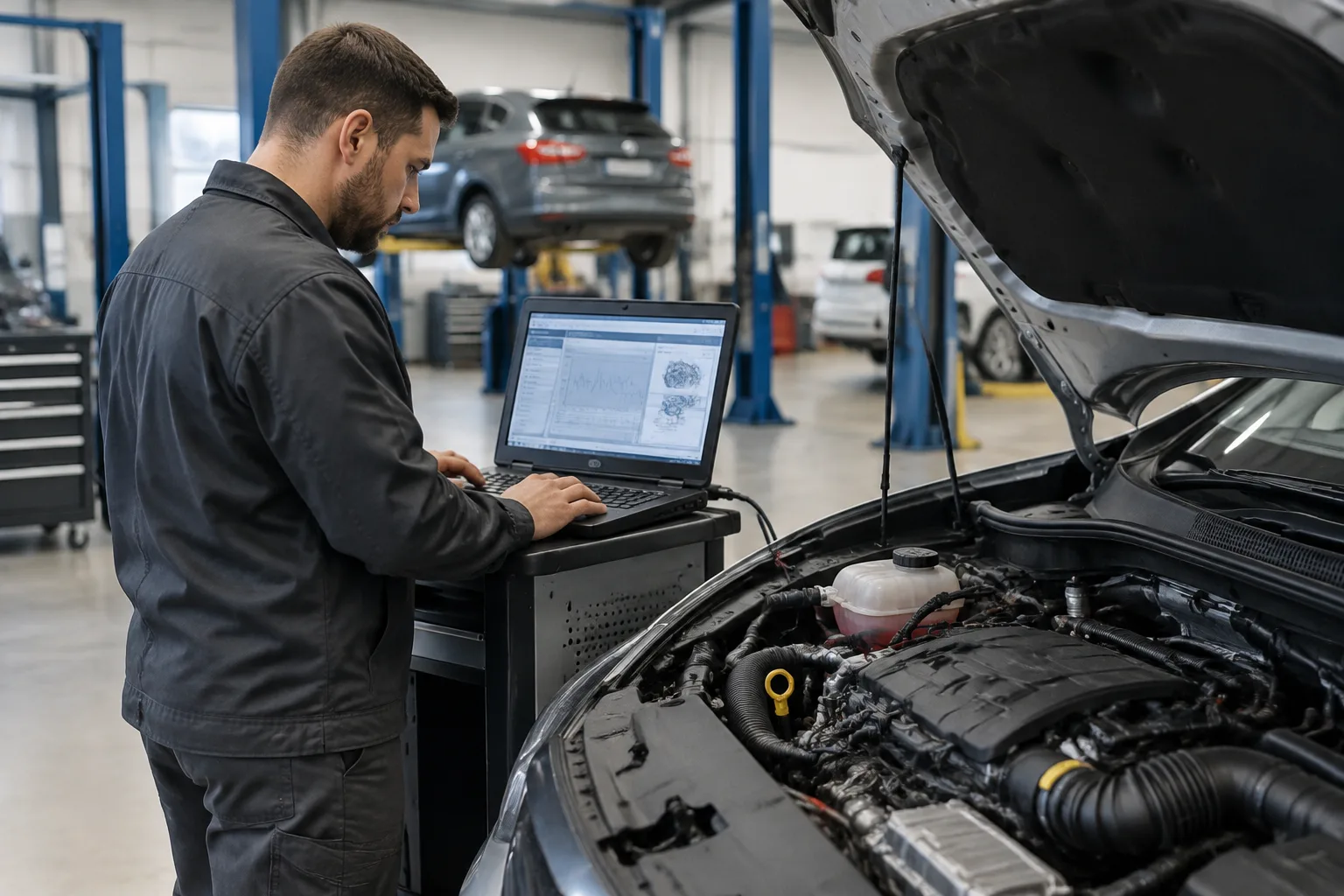
When you bring a vehicle to a specialist such as Boost Remaps for an AdBlue assessment, a structured, diagnostics-first approach is essential for long-term reliability. Technicians generally follow a clear process:
- Verification of Symptoms: Reviewing exact dashboard text, fault codes, freeze-frame data, and driving history.
- System Testing: Using advanced diagnostic equipment to test actuator responses, including dosing module activation and upstream/downstream NOx sensor readings.
- Physical Inspection: Inspecting wiring harnesses, connectors for urea crystal build-up, tank heaters, and fluid lines.
- Targeted Repair & Validation: Replacing or repairing only the verified failing component, followed by system resets, calibration adaptations, and validation road tests to ensure emissions controls operate within correct parameters.
For drivers interested in broader diesel optimization or looking to maintain efficiency alongside reliable daily driving, exploring balanced approaches to performance tuning for daily drivers helps ensure mechanical health is never compromised.
Compliance and Regulatory Context
Emissions-control systems are subject to strict regulatory frameworks across the United Kingdom. Under the GOV.UK MOT inspection manual, manufacturer-fitted emissions equipment—including selective catalytic reduction systems—must be present, complete, and functioning correctly. Vehicles can face major test defects if emissions components are missing, obviously modified, or visibly defective.
Frequently Asked Questions
Can I keep driving if the AdBlue warning light comes on?
It depends on the exact message and whether a countdown timer is active. If your dashboard displays a remaining distance or engine restart restriction, you should address the issue promptly to avoid being stranded when you switch off the ignition.
Why is my AdBlue warning still on after I topped up the tank?
Some vehicles require a specific ignition sequence, a minimum fluid volume, or a reset procedure via diagnostic software to register a top-up using certified ISO 22241 fluid. If the warning persists despite correct fluid levels, an underlying sensor, heater, or dosing fault is usually present.
Does an AdBlue system fault always require replacing expensive parts?
Not necessarily. Faults are sometimes caused by minor wiring corrosion, blocked injector nozzles, or temporary sensor communication errors. Professional diagnostic testing pinpoints the exact root cause before any hardware replacement is considered.
Should I clear fault codes or diagnose the system first?
Always diagnose the system first. Simply clearing fault codes without addressing the mechanical or electrical root cause will usually result in the warning light and limp mode returning within a short driving cycle.
Sources and References
- ISO 22241 Fluid Standard Specifications for Diesel Engines (NOx Reduction Agent AUS 32).
- Bosch Engineering Overview on Denoxtronic SCR Systems.
- GOV.UK MOT Inspection Manual for Exhaust Emission Systems.