
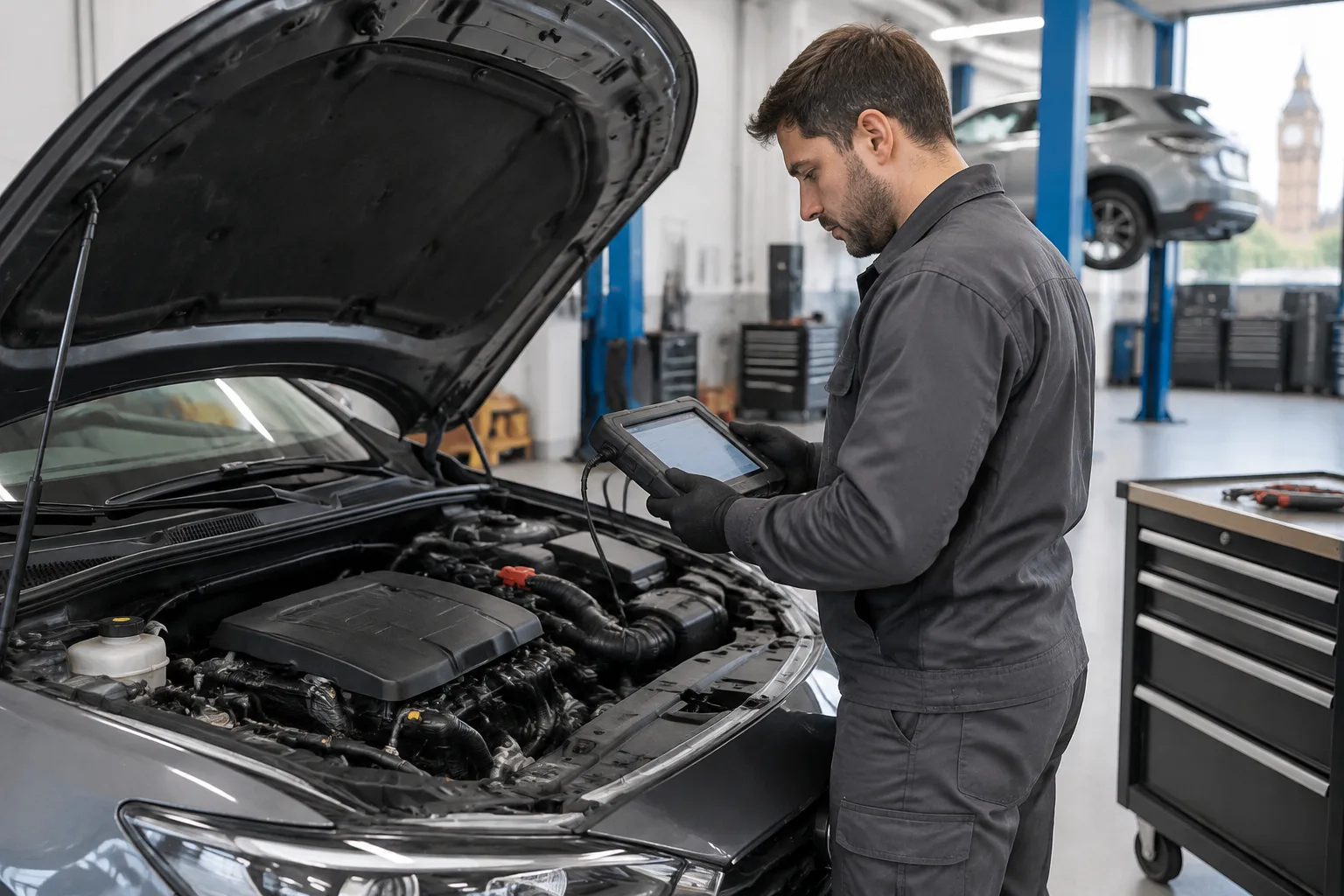
When looking into professional engine calibration across the capital, vehicle owners frequently ask: is remapping safe? Safety is never a blanket guarantee; rather, it depends entirely on your specific vehicle's make, model, current mechanical condition, and mileage. At Boost Remaps, we operate a strict diagnostics-first approach across our London service area. Before any custom calibration is written, our technicians evaluate live engine data using professional tuning tools to ensure your vehicle is mechanically fit for modification.
Whether you require a mobile appointment at your home or workplace in London, or prefer visiting our fully equipped workshop, understanding how modifications interact with vehicle health, legal frameworks, and insurance is essential. To explore general tuning principles, you can read our beginners guide to ECU remapping.
Direct Answer: Is Remapping Safe?Yes, ECU remapping can be completely safe when performed on a healthy, well-maintained engine using custom software mapped within safe operational thresholds. However, safety relies heavily on pre-diagnostic checks, professional calibration, high-quality fuel, and transparent disclosure of modifications to your insurer.
Is Remapping Safe for Your Vehicle?
Determining whether an ECU remap is safe requires looking beyond generic performance promises. According to DVSA guidance, vehicle modifications must be assessed on their individual merits. An unsafe modification is legally defined by its negative effect on overall roadworthiness, increased injury risk, or environmental compliance. Because every engine wears differently, Boost Remaps uses 100% custom, vehicle-specific calibration rather than generic pre-written files.
Before any tuning occurs, our in-house team performs comprehensive health checks. If underlying faults are detected during diagnostics, calibration is paused until the mechanical issue is resolved. For daily drivers seeking a balance between responsiveness and reliability, explore our insights on performance tuning for daily drivers.
How Do Technicians Ensure Engine Safety During Remapping?
Professional safety protocols during an ECU calibration process go far beyond simply uploading a software file. Technicians adhere to a strict multi-step procedure to safeguard engine longevity, protect vital components like the turbocharger and clutch, and maintain factory-intended fail-safes. The process involves comprehensive mechanical evaluations, live parameter logging during test runs, and ensuring air-fuel ratios remain within safe thermal limits.
Key Steps in Safe ECU Calibration
- Pre-Tuning Diagnostics: Scanning the vehicle's computer for active or pending error codes across all sub-systems.
- Data Logging: Monitoring live sensor feedback, including boost pressure, fuel rail pressure, and exhaust gas temperatures.
- Custom Map Writing: Adjusting parameters specifically for your car's exact wear patterns and hardware condition rather than applying a generic file.
- Post-Tune Verification: Conducting final diagnostic tests to confirm smooth power delivery and zero fault generation.
Mobile Service vs. Workshop Appointments in London
Boost Remaps provides flexible service options tailored to your location and technical requirements across London:
- Mobile Service: Professional tuning tools brought directly to your residential or workplace address, subject to safe, dry working space and adequate vehicle access.
- Workshop Facility: A fully equipped fixed location housing our experienced in-house team of technicians for complex diagnostic work, specialized remapping, and advanced hardware support.
Compliance, Legal Responsibilities, and Vehicle Maintenance
Modifying a vehicle's engine management system carries legal and regulatory responsibilities that every keeper must manage:
| Area | Regulatory Guidance & Responsibility |
|---|---|
| Roadworthiness | The vehicle keeper is legally responsible for keeping the vehicle roadworthy at all times. A standard MOT certificate only confirms roadworthiness at the exact time of testing and does not validate modifications. |
| Insurance Disclosure | The Financial Ombudsman notes that insurance providers view modifications based on their specific policy underwriting rules. Remapping must be disclosed, and failure to declare it can lead to rejected claims or voided coverage. |
| Emissions & DPF Integrity | Under the MOT inspection manual, missing, modified, or tampered-with emissions equipment (such as Diesel Particulate Filters) constitutes a major defect, resulting in an automatic MOT failure. |
| V5C Documentation | If a modification alters core details recorded on your V5C logbook, you must notify the DVLA. Check whether your specific calibration changes registered vehicle specifications. |
Frequently Asked Questions
Is remapping safe for high-mileage engines?
Safety depends on thorough diagnostic evaluation. High-mileage engines require strict health checks to ensure components like the turbocharger, injectors, and clutch can handle refined calibration parameters. We never tune a vehicle with unresolved mechanical faults.
Do I need to inform my insurance company about an ECU remap?
Yes. Industry bodies like the Financial Ombudsman advise that any engine modification must be declared to your insurer. Failing to disclose a remap can invalidate your policy or affect claim payouts.
What areas of London do you cover for mobile remapping?
Boost Remaps delivers mobile vehicle tuning and diagnostic services throughout Greater London. Contact our team directly with your postcode and vehicle details to confirm appointment availability and service suitability.
Will a remap cause my car to fail its MOT?
A legitimate, custom ECU remap tuned within safe operational parameters does not inherently cause an MOT failure. However, tampering with emissions control systems (such as removing a DPF) is classified as a major defect under current MOT rules.
What happens during the pre-remap diagnostic check?
Our technicians scan the vehicle's ECU for stored fault codes, check live sensor data, and inspect overall engine health using professional diagnostic equipment to ensure the vehicle is fully prepared for calibration.
Sources and References: - DVSA MOT inspection manual, unsafe modifications - DVLA guidance on vehicle changes and roadworthiness - Financial Ombudsman, car modifications and insurance - GOV.UK MOT manual, emissions equipment and DPF tampering - GOV.UK, catalytic converters and DPFs - DfT consultation on in-use vehicle emissions and modifications