
DSG tuning refers to the software calibration of a Direct Shift Gearbox (DSG) transmission control unit (TCU) or mechatronics system. Unlike an engine ECU remap that alters fuel delivery, ignition timing, and boost pressure, transmission software calibration changes how and when your vehicle selects gears, coordinates torque limits, and manages clutch engagement.
How DSG Gearboxes Work and What Tuning Changes
Volkswagen’s dual-clutch transmission design utilises two separate clutch and gear paths—traditionally, one path handles odd gears while the other manages even gears. This layout allows the next expected gear to be preselected, facilitating rapid gear changes under normal factory operating conditions. However, the exact hardware design, clutch type (wet or dry), and mechatronics layout vary significantly across different models and manufacturing years.
When specialists perform DSG/gearbox tuning at a fully equipped facility like Boost Remaps, the focus is entirely on altering the transmission software parameters rather than modifying physical components. Depending on the exact gearbox code, hardware version, and vehicle specification, custom software calibration may adjust:
- Shift Schedules and Points: Modifying the RPM thresholds at which upshifts and downshifts occur to match specific driving styles or engine power bands.
- Torque Coordination Limits: Adjusting internal software torque limits to safely communicate with modified engine parameters when an engine remap has been applied.
- Clutch Engagement Pressure: Fine-tuning clamp pressures where supported by the specific TCU software version to manage power delivery more effectively.
- Response Behaviour: Altering responsiveness in drive or sport modes to reduce perceived lag or hesitation during roll-on acceleration.
DSG Tune vs. ECU Remap: What is the Difference?
Vehicle owners often confuse engine management updates with transmission software modifications. Understanding the boundary between these two systems helps clarify when a gearbox calibration is appropriate.
| Feature | Engine ECU Remap | DSG / TCU Tune |
|---|---|---|
| Primary Target | Engine Control Unit (ECU) | Transmission Control Unit (TCU) |
| Core Function | Optimises fuel, air, boost, and timing. | Manages shift logic, clutch points, and torque limits. |
| Main Objective | Optimise engine power delivery and efficiency. | Refine gear transition timing and driveability characteristics. |
| Mechanical Dependency | Requires healthy turbo, fuelling, and ignition components. | Requires healthy mechatronics, clutch packs, and hydraulics. |
For a broader look at how balancing engine modifications affects daily driving comfort, read our guide on performance tuning for daily drivers.
Diagnostics-First Approach and Vehicle Suitability
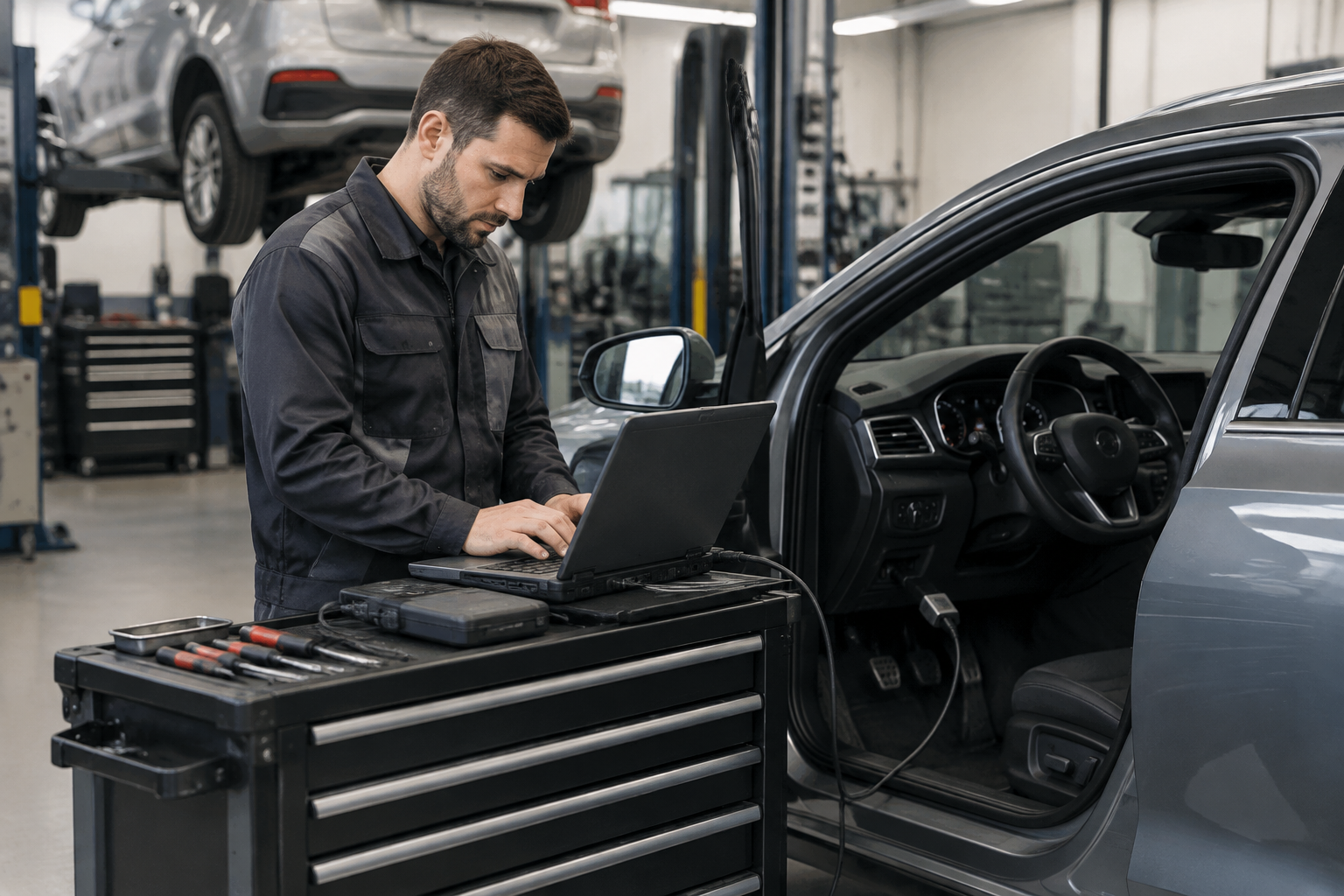
Software calibration is never a substitute for mechanical repair. If a gearbox exhibits shuddering, slip, harsh mechanical engagement, or diagnostic fault codes related to hydraulic pressure failures, a software update will not resolve the underlying issue. Professional technicians always perform comprehensive vehicle diagnostics prior to writing or flashing any custom calibration file.
When investigating whether your vehicle is suitable for transmission software updates, consider asking a provider:
- What initial diagnostic scans and live data checks are performed before altering software?
- Which exact TCU maps and parameters are proposed for your specific gearbox code?
- How the calibration is validated on professional tuning equipment.
- What protocols are in place if a mechanical fault or worn clutch pack is identified during inspection.
Frequently Asked Questions
What does DSG tuning change?
DSG tuning modifies transmission control software parameters. Depending on your specific gearbox version, it may adjust shift points, clamping pressure, torque limits, and the responsiveness of shift schedules in automatic or manual modes.
Is DSG tuning the same as an engine ECU remap?
No. An ECU remap alters engine management parameters such as air-fuel ratios and boost pressure. A DSG tune focuses exclusively on the transmission control unit to change how gear changes and power transfer are handled.
Do I need a DSG tune if my engine is remapped?
Not every engine remap requires a corresponding gearbox tune. However, if an engine tune significantly increases torque output beyond factory transmission limits, a TCU calibration may be used to coordinate torque requests and protect clutch longevity.
Can DSG tuning fix a harsh shift or mechanical fault?
Software calibration cannot repair worn mechanical components, failing mechatronics units, or damaged clutch packs. Diagnostics must always be performed first to ensure the gearbox is in sound mechanical health.
Will it affect my vehicle insurance or warranty?
Any vehicle modification, including software remapping, can be classed as a modification by insurers. According to guidance from the Financial Ombudsman Service, motorists should always inform their insurance provider about modifications to ensure adequate policy coverage. Warranty implications depend entirely on your specific provider's terms and conditions.
Sources and References
- Volkswagen UK, What is DSG? Technology FAQs.
- Volkswagen Newsroom, Polo Engines and Transmissions overview.
- Volkswagen Newsroom, Technical Glossary: How the T-Roc Works.
- Financial Ombudsman Service, Car Modifications and Insurance Insight.