When managing commercial vehicles or commercial fleets in the capital, minimizing operational downtime is critical. Choosing between a mobile visit and a fixed workshop environment for fleet ECU remapping London depends heavily on your site conditions, job complexity, vehicle accessibility, and logistical scheduling needs.
Both mobile ECU remapping and workshop-based tuning offer professional calibration, but they suit different operational environments. Understanding the core technical and practical differences helps fleet managers and vehicle operators select the safest and most efficient path forward without disrupting daily transport operations.
Direct Answer: Mobile vs Workshop Remapping
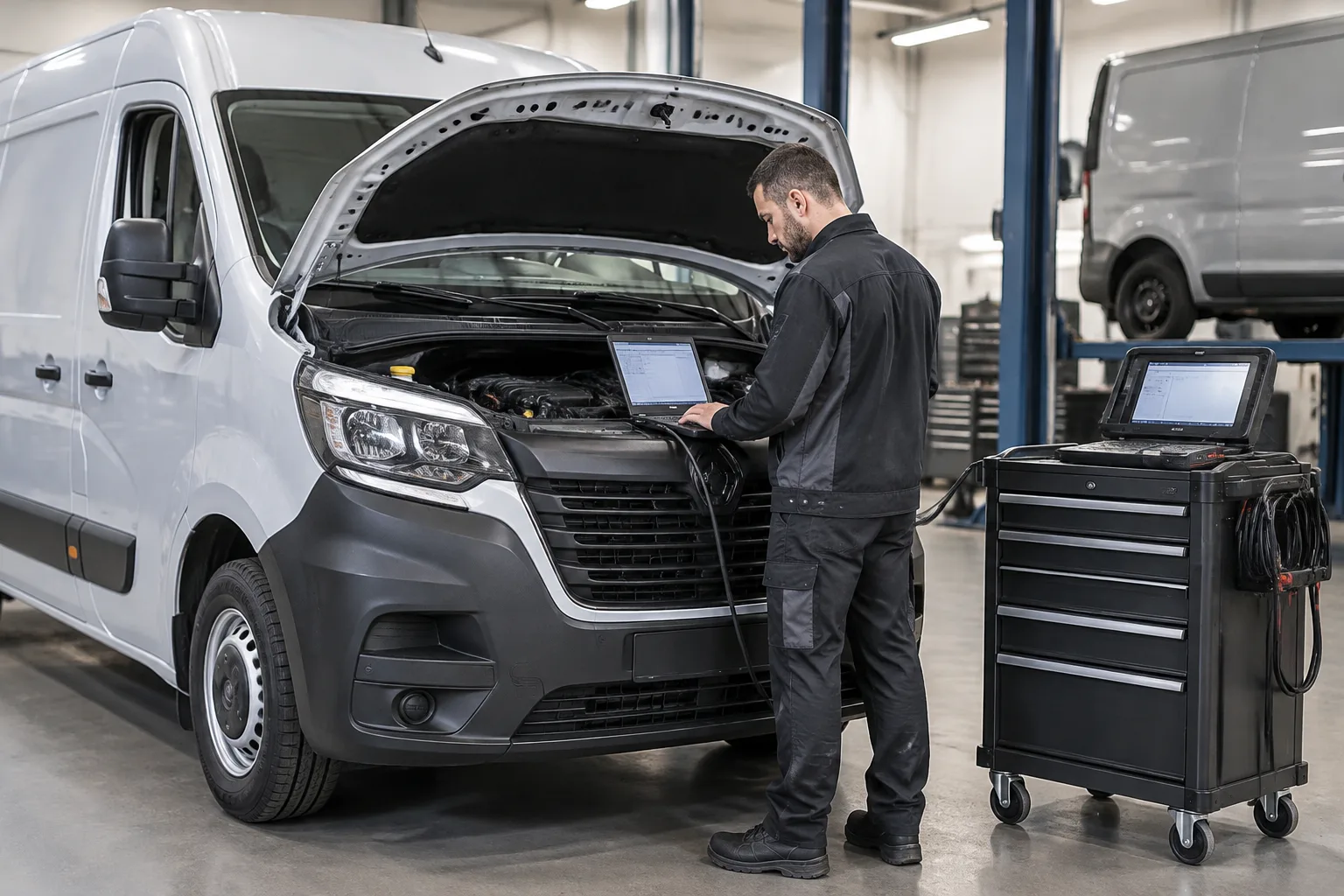
The choice between mobile service and a workshop comes down to operational convenience versus environmental control. A mobile service brings professional diagnostic and tuning tools directly to your depot, car park, or fleet base, eliminating vehicle transit time. A fully equipped workshop, meanwhile, provides a controlled, stable environment with dedicated infrastructure—ideal for complex diagnostic fault-finding, deep ECU/TCU interventions, or extensive mechanical inspections.
Key Comparison Points for Fleet and Commercial Operators
Evaluating whether to bring technicians to your site or send vehicles to a facility requires analyzing several operational variables. Review the table below to compare the two service formats side by side:
| Operational Factor | Mobile ECU Remapping | Workshop ECU Remapping |
|---|---|---|
| Location & Access | Performed at your depot, office car park, or fleet base across London. | Vehicle is brought to a dedicated, fully equipped tuning facility. |
| Vehicle Downtime | Reduces travel time; vehicles remain on-site until work begins. | Requires logistics and transport time to and from the workshop. |
| Site Conditions | Requires safe, dry, level ground with adequate clearance and power access. | Controlled indoor facility with specialized lighting, lifts, and equipment. |
| Diagnostics & Fault Finding | Comprehensive initial diagnostics using professional diagnostic interfaces. | Advanced diagnostic support with immediate access to heavy-duty workshop tools. |
When Should You Choose Mobile Fleet Tuning?
Opting for a mobile service is typically driven by logistics. If your fleet operates on tight daily shift patterns and moving multiple vans or cars to a garage creates unacceptable logistical overhead, a mobile visit is often the preferred route.
- Depot-based fleets: Technicians can service vehicles sequentially while parked at your operational base.
- Reduced transit overhead: Eliminates the fuel, driver time, and risk associated with moving vehicles across congested London traffic routes.
- Flexible scheduling: Work can often be aligned with off-peak hours or vehicle rest periods, provided adequate workspace, shelter, and security are available on-site.
However, mobile jobs require strict site suitability. Technicians need a stable surface, safe clearance around the vehicle, and protection from adverse weather conditions to safely connect programming and diagnostic equipment.
When Is a Workshop Environment Necessary?
While mobile convenience suits routine remapping and light diagnostics, certain complex jobs are best suited to a controlled workshop environment. Boost Remaps operates both mobile services and a fully equipped workshop staffed by in-house technicians.
A workshop setting is particularly beneficial when vehicles require:
- In-depth mechanical investigations or multi-system fault diagnosis prior to calibration.
- Gearbox or TCU tuning that benefits from specialized lifting equipment or continuous mains power stability.
- Complex custom calibrations requiring iterative testing and hardware inspections.
For more insights into custom calibration approaches, read our guide on ECU remapping vs chip tuning.
Technical Considerations: Diagnostics First
Regardless of whether the work is performed via mobile call-out or at a fixed facility, a professional tuning process must always begin with thorough diagnostics. Uncovering latent fault codes or worn components before modifying engine parameters helps protect engine health and long-term reliability.
Fleet operators should verify what pre-tuning checks are included. Professional calibration relies on vehicle-specific data maps rather than generic files, tailoring performance and efficiency characteristics to the exact engine variant, transmission type, and operational load profile.
Regulatory Compliance, Insurance, and Warranties
Modifying a vehicle's engine management system carries legal and administrative obligations that fleet managers must navigate carefully:
- Insurance Disclosure: The Financial Ombudsman Service notes that engine modifications can be considered material facts by insurers. Always notify your vehicle insurer regarding modifications to ensure your commercial policy remains fully valid.
- Emissions & MOT Standards: Emissions control systems, including Diesel Particulate Filters (DPFs), must remain functional and compliant. According to DVSA guidance, removing or disabling emissions equipment fitted as standard results in an MOT failure and violates road traffic regulations.
- Manufacturer Warranties: Check specific manufacturer terms regarding software modifications and how they interact with existing warranties.
Frequently Asked Questions
Can mixed fleets with different makes and models be remapped on-site?
Yes, professional mobile tuning equipment supports a wide variety of commercial vehicle makes, models, and engine management systems, provided proper diagnostic protocols and power stability are maintained on-site.
What site requirements are needed for a mobile fleet visit?
A mobile visit requires safe, level, and dry ground with adequate clearance around each vehicle. Technicians also need reliable access and sufficient space to connect professional diagnostic and programming interfaces securely.
What is the difference in diagnostic capability between mobile and workshop services?
Both services utilize professional-grade diagnostic tools for initial fault scanning and live data logging. However, a workshop environment provides immediate access to heavy lifting equipment, specialized hardware, and backup infrastructure should complex mechanical intervention be required.
Does a remap affect my commercial vehicle insurance or MOT status?
Engine remapping is a modification that should be disclosed to your insurance provider. Regarding MOT compliance, standard emissions equipment such as DPFs must remain active and functional, as tampering or removal violates DVSA inspection guidelines.