
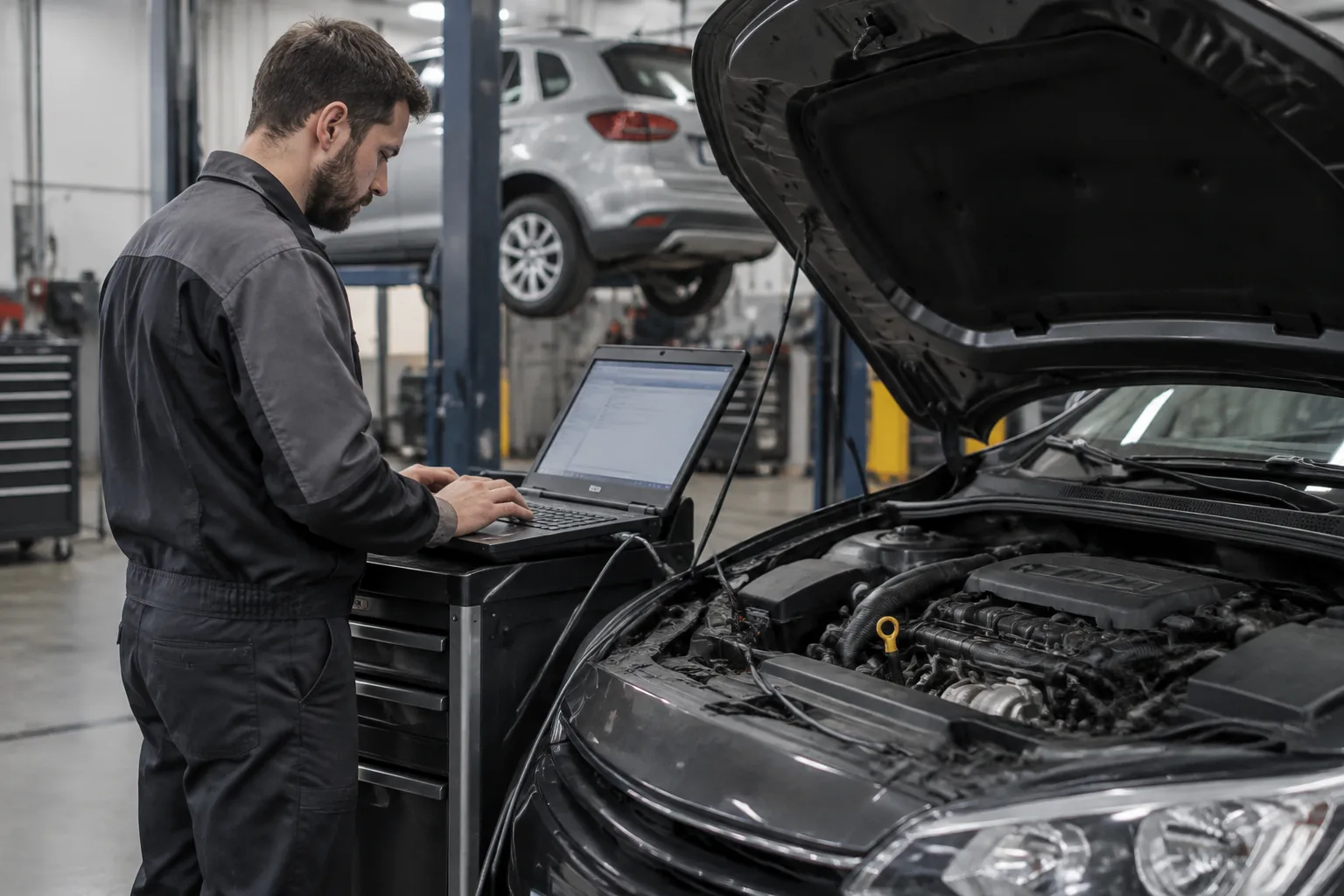
A diesel particulate filter (DPF) warning light or sudden drop into limp mode signals that your vehicle's emissions system requires immediate attention. A professional DPF solution car tuning approach focuses on diagnosing underlying faults, reviewing live sensor data, and restoring normal regeneration cycles rather than applying generic temporary fixes.
At Boost Remaps, our Google 5.0* Rated team uses a diagnostics-first methodology to identify why a filter has accumulated excessive soot. Operating across London with both a fully equipped workshop and mobile service available, we ensure every intervention respects UK emissions standards and manufacturer specifications.
Understanding DPF Faults and Limp Mode
Modern diesel vehicles rely on a diesel particulate filter to trap harmful soot particles before they exit the exhaust system. Over time, normal driving conditions—particularly frequent short urban trips—can prevent the vehicle from initiating passive or active regeneration. When soot accumulation passes a certain threshold, engine management systems may trigger a dashboard warning light and restrict engine performance, commonly known as limp mode, to protect internal components.
Crucially, a dashboard fault code does not automatically mean the filter itself is physically ruined or must be replaced. Professional diagnostics are essential to separate a simple regeneration failure from secondary mechanical or electrical issues.
Comparing DPF Service Routes
Choosing the correct course of action depends entirely on precise diagnostic data. The table below outlines common intervention paths, their primary functions, and what they can achieve:
| Service Approach | Primary Function | Key Consideration |
|---|---|---|
| Diagnostic Assessment | Reads fault codes, live data, and checks sensor integrity. | Identifies root causes before any physical work begins. |
| Regeneration | Burns off accumulated soot when vehicle parameters allow. | Does not remove residual ash; requires specific operating conditions. |
| Sensor/Component Repair | Replaces failed differential-pressure or temperature sensors. | Essential if faulty readings prevent the ECU from triggering regeneration. |
| Filter Replacement | Installs a new DPF when internal damage or ash saturation occurs. | Necessary when structural integrity is compromised or cleaning is ineffective. |
Why a Diagnostics-First Approach Matters
Many recurring DPF blockages are symptoms of a wider mechanical issue rather than a failing filter. According to technical guidance from component manufacturers like Bosch, differential-pressure sensors play a critical role in monitoring filter loading and feeding accurate data back to the engine control unit. If a sensor fails or provides distorted readings, the vehicle may fail to initiate normal regeneration cycles.
By prioritizing a thorough system scan over immediate part replacement, technicians can uncover:
- Faulty temperature or differential-pressure sensors restricting ECU commands.
- Thermostat or glow plug failures preventing the exhaust gas temperatures required for regeneration.
- Injector malfunctions or fuel delivery issues increasing particulate production.
- Excessive ash buildup that requires specialist cleaning or mechanical replacement.
For drivers exploring broader performance optimisation alongside emissions management, understanding how engine adjustments interact with fuel efficiency and reliability is vital. You can read more about balancing these elements in our guide on diesel tuning and torque reliability.
What to Do When Your DPF Light Illuminates
When dealing with a blocked filter or investigating a reliable DPF solution car tuning service, following a structured workflow helps avoid costly missteps:
- Verify Dashboard Indicators: Note whether you have an amber warning light, a flashing coil, or an active limp mode activation.
- Attempt Active Regeneration (If Safe): Drive at sustained speeds above 40 mph on an open road for 20–30 minutes if permitted by traffic and vehicle status.
- Book a Professional Diagnostic Scan: Connect diagnostic tooling to read live exhaust pressures, soot load percentages, and sensor feedback voltages.
- Target the Root Cause: Fix sensor anomalies, thermostat failures, or fuel delivery faults before clearing codes or attempting forced regeneration.
UK Legal Compliance and DPF Removal
Vehicle owners frequently encounter misleading claims regarding "permanent DPF solutions" that involve physical removal or electronic deletion. In the United Kingdom, removing or bypassing manufacturer-fitted emissions equipment is strictly regulated. According to GOV.UK guidelines and the Road Vehicles (Construction and Use) Regulations 1986, a missing DPF where one was fitted from manufacture will cause an automatic failure at the MOT test. Furthermore, tampering with diesel emissions systems contravenes legal road-use requirements.
At Boost Remaps, our DPF solution car tuning services are strictly designed to diagnose, service, and restore factory-compliant emissions functionality, ensuring your vehicle remains fully road-legal and compliant with UK MOT standards.
Frequently Asked Questions
What should I do if the DPF warning light appears?
If your DPF warning light illuminates, check your vehicle handbook for manufacturer-specific guidance. Often, sustaining a steady drive at motorway speeds for 20 to 30 minutes allows the car to complete an active regeneration cycle. If the light remains on or is accompanied by reduced power, arrange for a professional diagnostic check immediately.
Does a DPF fault mean the filter needs replacing?
Not necessarily. Many DPF faults stem from failed sensors, thermostat issues, or interrupted regeneration cycles rather than a fully blocked filter. A comprehensive diagnostic assessment is required to determine whether the existing filter can be saved or restored.
Is a forced regeneration suitable for every blocked filter?
No. A forced regeneration is a controlled workshop procedure that is only safe and effective when specific criteria are met. If soot levels are critically high or internal ash saturation is extreme, forcing a regeneration can cause excessive heat buildup and damage surrounding components.
Can Boost Remaps assess my vehicle in London?
Yes. Boost Remaps operates across London, offering both a fully equipped workshop and a convenient mobile service to perform accurate vehicle diagnostics and professional ECU calibrations at your location.
Sources
- GOV.UK: Diesel particulate filters guidance note - https://www.gov.uk/government/publications/diesel-particulate-filters-guidance-note/diesel-particulate-filters
- GOV.UK: MOT inspection manual for private passenger and light commercial vehicles, section 8 - https://www.gov.uk/guidance/mot-inspection-manual-for-private-passenger-and-light-commercial-vehicles/8-nuisance
- Bosch Aftermarket: Sensor technology and differential-pressure monitoring - https://www.boschaftermarket.com/gb/en/parts/products/sensors/
- Society of Motor Manufacturers and Traders (SMMT): UK Aftermarket and Emissions Compliance Standards - https://www.smmt.co.uk/
- Department for Transport: In-use emissions of road vehicles consultation - https://www.gov.uk/government/consultations/in-use-emissions-of-road-vehicles-regulating-environmental-impacts/regulating-environmental-impact-of-in-use-emissions-of-road-vehicles